
The Rise of Agentic AI
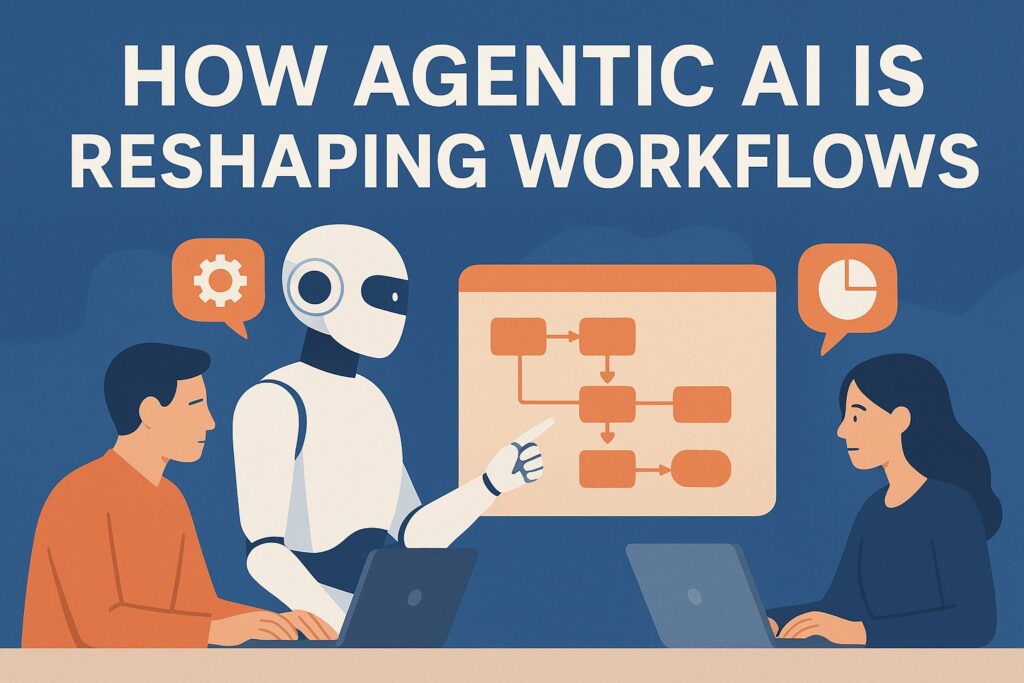
Artificial Intelligence (AI) has long been associated with automation—systems that follow predefined rules to execute repetitive tasks. However, the next frontier is Agentic AI for ERP System, where intelligent agents act autonomously, perceiving their environment, making decisions, and executing actions without constant human intervention. Unlike traditional AI that requires human-in-the-loop validation, agentic systems can detect anomalies, adapt to dynamic conditions, and orchestrate complex workflows in real time.
Enterprise Resource Planning (ERP) systems, the backbone of organizational operations, cannot afford to miss this transformation. ERP has historically streamlined processes across finance, supply chain, manufacturing, and asset management. Yet, in today’s volatile markets, rule-based automation is insufficient. Agentic AI offers ERP the ability to move from reactive execution to proactive autonomy, ensuring resilience, efficiency, and enhanced customer experiences.
Supply Chain: From Reactive to Autonomous
Supply chains are increasingly vulnerable to disruptions—geopolitical shifts, climate events, and fluctuating consumer demand. Traditional ERP systems rely on historical data for forecasting, often leaving businesses exposed to sudden shocks. Agentic AI changes this paradigm by:
– Real-time foresight: Leveraging IoT sensors, social media sentiment, and weather data to predict demand shifts instantly.
– Autonomous logistics optimization: AI agents simulate millions of logistics scenarios, rerouting shipments, adjusting delivery timelines, and communicating directly with transport APIs without human intervention.
– Customer experience enhancement: Customers benefit from accurate delivery timelines and proactive communication when disruptions occur.
This autonomy transforms supply chains into self-healing ecosystems, reducing delays and improving reliability.
Finance: Intelligent Oversight and Risk Mitigation
Finance modules in ERP traditionally enforce compliance and consistency but struggle with anomalies and fraud detection. Agentic AI enhances financial workflows by:
– Autonomous anomaly detection: Identifying irregular transactions in real time and preventing escalation.
– Dynamic reconciliation: Agents can suggest adjustments to discrepancies, reducing manual intervention and saving hours of effort.
– Customer-centric transparency: Automated updates on invoices, payments, and credit risks improve trust and responsiveness.
By embedding agentic intelligence, finance teams move from manual oversight to proactive guardianship, ensuring accuracy and resilience in financial operations.
Manufacturing: Adaptive and Resilient Production
Manufacturing ERP modules often face challenges with demand variability and production scheduling. Agentic AI introduces adaptability by:
– Predictive scheduling: Adjusting production plans automatically based on real-time demand signals.
– Quality assurance: Agents monitor sensor data from production lines, detecting anomalies before they affect output.
– Customer responsiveness: Production schedules can be aligned with customer demand shifts, ensuring timely fulfilment.
This shift enables manufacturers to balance efficiency with agility, reducing waste and enhancing customer satisfaction.
Asset Management: Proactive Maintenance and Optimization
Asset-intensive industries rely on ERP for maintenance scheduling and lifecycle management. Agentic AI elevates asset management by:
– Predictive maintenance: Agents analyze sensor data to forecast equipment failures before they occur.
– Autonomous resource allocation: AI agents schedule technicians, source spare parts, and trigger repairs without human intervention.
– Enhanced customer usage: Downtime is minimized, ensuring customers experience uninterrupted service and reliability.
By embedding agentic intelligence, asset management evolves from reactive repairs to proactive optimization, extending asset lifecycles and reducing costs.
Workflows Reimagined
Agentic AI represents a paradigm shift in ERP workflows. Instead of static, rule-based automation, enterprises gain dynamic, autonomous systems that continuously learn, adapt, and act. Supply chains become resilient, finance becomes proactive, manufacturing becomes adaptive, and asset management becomes predictive.
For customers, this translates into greater reliability, transparency, and responsiveness. For enterprises, it means reduced costs, improved efficiency, and competitive advantage. As Gartner predicts, by 2028, one-third of enterprise software will include agentic AI, making up to 15% of daily decisions autonomous.
ERP systems must embrace this evolution—not as a trend but as a necessity. With agentic AI, workflows are no longer just managed; they are intelligently orchestrated, ensuring enterprises thrive in an era of volatility and complexity.
Make sure that you choose ERP with Agentic AI features and ensure that the vendor implementing the product understand the nuances of AI to make sure that you get expected ROI.


